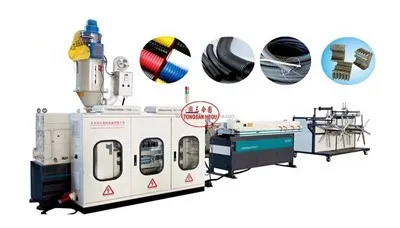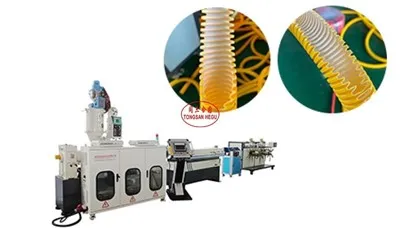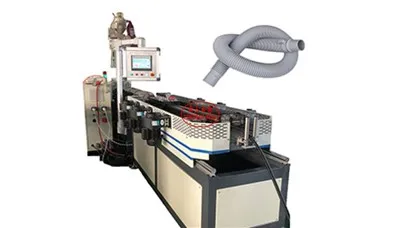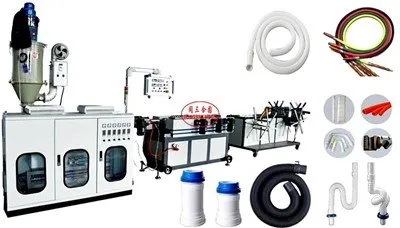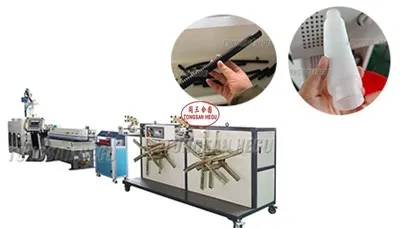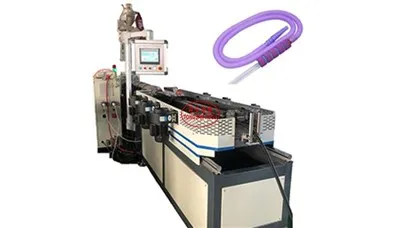
This type of equipment is used for melting plastic raw materials and extruding them into pipes. The typical process is as follows:
1. Pre-startup preparation
Check whether the water, electricity, and gas systems are unobstructed and leak-free.
Check the flexibility and reliability of operations for traction machines, cutting machines, vacuum chambers, etc.
Install the corresponding mold and sizing sleeve according to product specifications, and adjust the concentricity.
Set temperatures for each heating zone (e.g., reference temperatures for PVC extruders: barrel zone 185–192°C, die zone 175–185°C, etc.).
Preheat and maintain temperature for 30–60 minutes to ensure uniform and stable heating.
2. Startup sequence
Start the main motor first, then initiate the screw at low speed (typically 5–10 RPM) and gradually feed the material.
After the material is uniformly extruded from the die, connect the guide tube to the traction machine.
Start the traction machine and adjust the speed to match the extrusion rate.
Start the vacuum pump and spray cooling system, and adjust the vacuum level (typically 0.02–0.04 MPa).
Start the cutting machine, set the length, and begin normal production.
3. Shutdown sequence
Stop feeding, reduce screw speed, and drain residual material from the barrel.
Rinse the barrel with cleaning material or fresh material to avoid residual charred material.
Sequentially shut down the traction machine, cutter, vacuum pump, heater, etc.
Clean the equipment and record operation logs.
4. Precautions
Strictly prohibit the entry of hard objects such as metal, sand, or gravel into the hopper.
Do not reach into rotating or pneumatic components while in operation.
Screws must not be allowed to idle or operate at low speed under no load for extended periods.